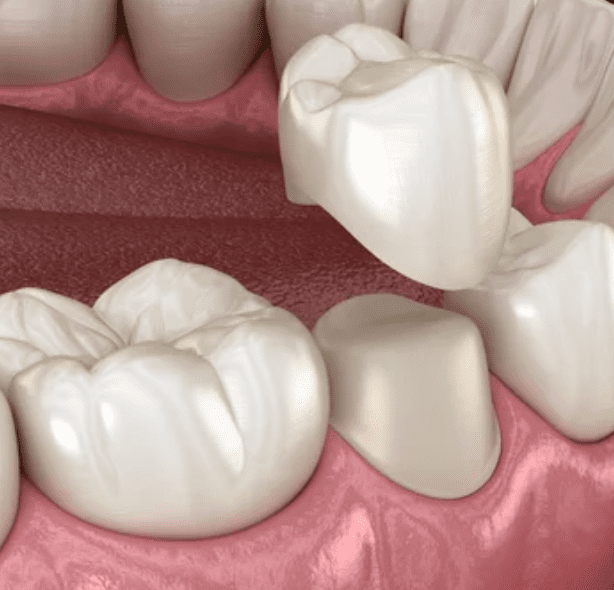
Dental crowns are porcelain caps that your dentist will place on your teeth. To set the crown, your dentist must reshape your tooth to fit the crown. Then, they will use a special dental cement to keep the dental crown in place. Your dentist may use dental crowns for both cosmetic and restorative purposes. Whether you need an emergency fix for a broken tooth or restoration, dental crowns in Owens Cross Roads, AL, can change the look and function of your smile.
Common Reasons You Need a Dental Crown
Dr. Duling recommends a crown for several reasons. This dental restoration is a great option for multiple treatments.
1. You Have a Large Cavity or Severe Decay
One of the most common reasons Dr. Duling recommends a crown is severe tooth decay. When you have a cavity, your dentist removes the decayed portion of your tooth and fills the space. But what happens when the cavity is too large for a regular filling?
If more than half of your tooth structure is damaged by decay, a filling simply isn’t strong enough. The remaining tooth walls are too thin and weak to support a filling. They could crack or break under normal chewing pressure. In these cases, a crown is necessary to hold the tooth together and protect it from further damage.
2. You Need a Root Canal
If you’ve been told you need a root canal, you’ll almost always need a crown afterward. This surprises many patients, but there’s a good reason for it.
During a root canal, Dr. Duling removes the infected pulp and nerves from inside your tooth. A crown protects the tooth after root canal treatment. It acts like a strong shell that holds the tooth together and allows it to function normally. Without a crown, a root canal-treated tooth often breaks within a few years, and you could lose the tooth entirely.
3. Your Tooth Is Cracked or Broken
Teeth can crack or break in many ways. Dr. Duling can help you if you:
- Bite down on hard foods like ice, popcorn kernels, or hard candy
- Use teeth as tools to open packages or bottles
- Grind or clench your teeth at night
- Have an accident or sports injuries
- Have weakened enamel from tooth decay or acid erosion
A cracked or broken tooth is more than just uncomfortable. It can cause sharp pain when you bite down or when you eat hot or cold foods. The crack can expose the sensitive inner layers of your tooth, including the nerves. Without treatment, the crack can spread deeper into the tooth, possibly reaching the root.
A crown stops the crack from spreading and protects the damaged tooth. It covers the entire tooth above the gum line, holding all the pieces together. Many patients report immediate relief from pain once their crown is in place.
4. Your Teeth Are Severely Worn Down
Do you wake up with a sore jaw? Has your dentist mentioned that your teeth look flat? You might have bruxism, which means you grind or clench your teeth. Many people grind their teeth at night without even knowing it.
Over time, grinding wears down the natural shape of your teeth. Your teeth lose their points and ridges, becoming flat and short. This affects more than just appearance. Worn teeth make it harder to chew food properly. Your bite can change, causing jaw pain and headaches. Your face may even look shorter because your teeth are too flat.
When Dr. Duling examines patients in Owens Cross Roads, she looks for signs of tooth wear. If your teeth are severely worn, she may recommend crowns to rebuild them to their proper height and shape. This restores your ability to chew efficiently and can relieve jaw pain.
5. You Have a Weak Tooth That Might Break
Some teeth are at high risk of breaking even though they haven’t cracked yet. Dr. Duling might recommend a crown as a preventive measure if your tooth:
- Has a very large old filling that’s weakening the tooth walls
- Has multiple fillings in different areas
- Shows early signs of cracking
- Has been weakened by decay or previous dental work
A crown protects these vulnerable teeth before they break. This is often less expensive and less painful than waiting for the tooth to crack and needing emergency treatment. Think of it as preventive care that saves you problems down the road.
6. You’re Getting a Dental Bridge
If you’re missing one or more teeth, a dental bridge is one way to fill the gap. A bridge includes artificial teeth that sit in the empty space, but they need to be anchored to your remaining natural teeth.
Dr. Duling places crowns on the teeth on either side of the gap. These crowned teeth act as support pillars that hold the bridge in place. The bridge is custom-made as one connected piece, with crowns on the ends and replacement teeth in the middle.
Without crowns on the anchor teeth, there would be no way to securely attach the bridge. The crowns distribute the chewing forces evenly and keep the bridge stable.
7. You Have a Dental Implant
When you get a dental implant to replace a missing tooth, the implant itself is just the metal post that goes into your jawbone. It acts as an artificial tooth root. But you need something visible above the gum line that looks and functions like a real tooth.
That’s where the crown comes in. Dr. Duling attaches a custom crown to the top of your implant. This crown looks just like your natural teeth and allows you to chew and smile confidently. Implant crowns are designed to last for many years with proper care.
Trust Your Smile to Cove Family Dentistry
If you’ve been told you need a dental crown or you’re experiencing tooth pain, don’t wait. Dr. Elizabeth Duling and her team at Cove Family Dentistry are here to help.
Call 256-534-1475 or schedule a consultation with Dr. Duling online. We serve patients throughout Owens Cross Roads, Huntsville, Madison, Harvest, and the surrounding communities.